Protecting, Picking, Eating Home Grown.
The recent rain has given me a respite from having to water the plot.
More good news is that the crops this year are good and really full of flavour.
New Potatoes.
The potatoes we are eating ( Charlotte) have that taste and texture that shop bought ones fail to deliver.
If I had to describe the difference in my home grown potatoes to purchased ones, I would say when cooked they have a slightly earthy taste. Unless you make the mistake of over cooking them they are also perfect with salads as they do not fall apart.
Fruit Crops. Redcurrant, Blackcurrants and White Currant.
For me the picking, eating and storing of these are now coming to an end.
The crops from the currant bushes have made it worth the effort of netting them, although at the time it took time and seemed a struggle to do so.
Netting the fruits is not something I have mastered, as I want a cheap and versatile way of doing it.
In the end I used a black pond type netting, which I supported on garden canes ( tall enough to lift them net well above the top of the fruit bushes. On top of each bamboo cane I put an upside down empty detergent bottle to support the net and to prevent it sliding down the cane.
Although my crop protection was not the most elegant of the methods available it did work well to save the fruit from becoming breakfast for the birds.
How do I use the blackcurrants and redcurrants ?
(Did you know that research has shown blackcurrants have more antioxidants than blueberries?)
I eat some freshly picked, make some into a very tasty compote and also freeze some down in usable quantities in freezer bags or containers.
Sometimes, I cook the fruits and then freeze the cooked fruit or compote down.
My Summer Strawberries.
My strawberry plants are in a raised bed and I have never used straw beneath them.
This year I did scatter straw under the fruits. Maybe it was the addition of the straw or just the wet weather but whatever, this was a year when snails and some slugs found a new home in the strawberry raised bed. I discarded the fruits they had feasted on but still had a good crop to use in the kitchen.
I like to cook up any slightly over ripe strawberries and then use this to make milkshakes or to eat with breakfast cereals or even spread on toast.
I just put the strawberries in a pan with a small amount of sugar and sometimes I add a very small quantity of water and cook until they reach the texture I want ( making them softer for milkshakes and less so for breakfast times).
Showing posts with label home grown food. Show all posts
Showing posts with label home grown food. Show all posts
Tuesday, 7 July 2015
Sunday, 14 October 2012
Photos of food from allotments and the vegetable garden.
Photos of food - can you guess what they have in common?
Photo number one photo is of a bowl of freshly picked salad leaves.


No doubt you will have known from the start that they are all home grown.
The other things that are not so obvious are
- None of them come with a use by date.
- None of them came in a package of any sort.
- None of them clocked up any land or air miles to reach our plates.
- None of the bits that could not be eaten went to landfill - we composted the leaves of the rhubarb. The guinea pig ate the carrot tops but they could have been composted if not.
- No chemicals or sprays were used in growing any of the food in this posting.
- I like taking photos of the things that we grow.
That is it really the gardeners and own food growers will know all of that already but maybe it is time to reach out and try to stop so much good food going to landfill just because it is not all a uniform shape, colour or size.
A Border spade is the type that I use for digging on the vegetable plot as it is smaller than a normal garden spade. I need a smaller spade like this, as a traditional spade is too large and heavy for me to be able to work with on the allotment or in the garden.
Subscribe to:
Posts (Atom)
a healthy potato plant in flower
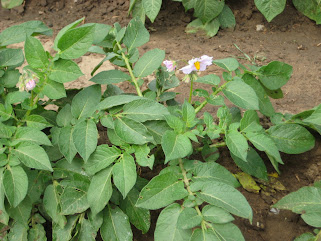
photo of potatoes in flower
home grown carrots.. grown from seed

photo of my first bunch of carrots 2009
Even a small batch of mixed fruit can be useful

Home Grown Fruit can be made into delicious compote